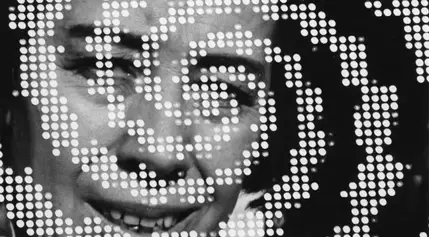
Barbara Crane, the renowned Chicago artist passed away in 2019. Her work, featured on this week's cover, was defined by a deep connection to the city's social and physical landscape. Her current solo exhibition at Paris's Centre Pompidou showcases over 200 works from the first 25 years of her practice, accompanied by a new monograph by Atelier EXB. Lynne Brown, an artist and former studio manager, shares insights into Crane's history and legacy. Uncover the Chicago Artistry of Barbara Crane
Early Beginnings and Influences
Barbara Crane's journey began in 1948 when she developed her first roll of film. This marked the start of a decades-long career filled with daring formal experimentation. Before that, she had been working as a photographer, making portraits but found it uninteresting. It was her encounter with Aaron Siskind at the Institute of Design that transformed her work. Siskind, running the program, invited her to join the master's program despite her initial hesitation. This led to a new chapter in her artistic life.She was familiar with Siskind's work and saw an opportunity to grow. Her early time at the Institute, with its grounding in the Bauhaus and the work of László Moholy-Nagy, laid the foundation for her unique style. It opened her eyes to new possibilities and inspired her to push the boundaries of photography.
Connection to Chicago's Landscape
Crane's work was deeply intertwined with Chicago's social and physical landscape. She often spoke about having summer work and winter work. In the summers, she would go out and photograph in crowds, creating series like Beaches and Parks (1972-1978) and Private Views (1980–1984). These works captured the essence of the city during different seasons.During the winters, she focused on studio work, creating series such as Still Lifes (1997–2002) and Objet Trouvé (1982–1988). These were photographs of objects she collected and found fascinating. Her connection to the city was unwavering, and she saw it as a source of inspiration for her art.
The Centre Pompidou Exhibition and Book
The curator, Julie Jones, discovered Crane's work while doing her PhD on U.S. photography in the 30s and 40s. She was interested in making Crane and her work more prominent, especially as a woman and a single parent. The exhibition at the Centre Pompidou and the accompanying book brought Crane's work to a wider audience.It showcased the diversity and depth of her art, from her early days to her later works. The book provided a comprehensive look at her career, making it accessible to art lovers around the world.
Characteristics as an Artist
A friend described Crane as experimental, expansive, fearless, and inspired. She couldn't help but make work and constantly challenged herself. With series like People of the North Portal (1970–1971), she positioned herself with a large-format camera outside the Museum of Science and Industry and photographed people coming out. She saw mistakes as opportunities and would pick them apart and pursue them.Her childlike wonder and heightened fascination brought a unique perspective to her photography. She was a lifelong Chicagoan and felt that she did her best work here, constantly returning to the places she photographed.
Legacy and Remembering
Crane's legacy was important to her. She wanted her work to live on beyond her lifetime and be placed well. She had a unique way of connecting with the world through her work and the process of discovery.She never said "when I die" but "if I die," showing her love for life and her determination to leave a mark through her art. Her work continues to inspire and influence artists today, and her connection to Chicago remains a significant part of her artistic identity.