
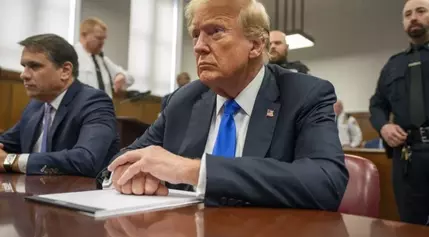
In a historic legal development, President-elect Donald Trump is set to be sentenced on January 10th for his conviction in the hush money case. This sentencing comes just days before he is scheduled to return to the White House on January 20th. Despite this unprecedented situation, Judge Juan M. Merchan has indicated that Trump will not face jail time but will instead receive a conditional discharge, closing the case without imposing fines or probation. The judge dismissed arguments about presidential immunity and constitutional disruptions, emphasizing the importance of bringing finality to the matter.
Details of the Case and Sentencing Decision
In the heart of New York City, amidst a whirlwind of political and legal drama, Judge Juan M. Merchan made a significant ruling on Friday. He announced that the former and future president, Donald Trump, would be sentenced on January 10th for his conviction on 34 counts of falsifying business records. This case revolves around an alleged scheme to conceal a payment made to adult film actress Stormy Daniels during the final weeks of Trump's first presidential campaign in 2016. The payment was intended to prevent Daniels from revealing claims of a past relationship with Trump, which he has consistently denied.
The judge’s decision came after careful consideration of various legal arguments. Trump’s legal team had sought to dismiss the case, citing presidential immunity and potential disruptions to his ability to govern. However, Merchan ruled that Trump’s status as president-elect does not grant him the same immunity as a sitting president. He emphasized that dismissing the verdict would undermine the rule of law. Instead, Merchan opted for a conditional discharge, ensuring that the case is closed without further punitive measures. This decision sets a precedent, making Trump the first president to take office while convicted of felony crimes.
Michael Cohen, Trump’s former personal attorney, played a central role in the case. He initially paid Daniels and later received reimbursement through payments logged as legal expenses by Trump’s company. Prosecutors argued that these actions were designed to obscure the true purpose of the payments and influence voter perception during the campaign. Trump maintained that the payments were legitimate legal fees and that Daniels’ claims were false.
The case has been marked by controversy and political tension. Trump has repeatedly denounced the proceedings as part of a "witch hunt" orchestrated by Manhattan District Attorney Alvin Bragg. Despite efforts to move the case to federal court and assert immunity, these attempts were unsuccessful. The hush money case remains the only one of Trump’s four criminal indictments to reach trial.
With the sentencing now set, the nation watches closely as history unfolds. Trump’s return to the presidency under these circumstances raises important questions about the balance between legal accountability and executive power.
From a journalistic perspective, this case underscores the critical importance of upholding the rule of law, even in the highest echelons of power. It serves as a reminder that no individual, regardless of their position, is above the law. For readers, it highlights the ongoing need for transparency and accountability in both politics and the justice system. The coming weeks will undoubtedly bring further developments as this unprecedented chapter in American history continues to unfold.