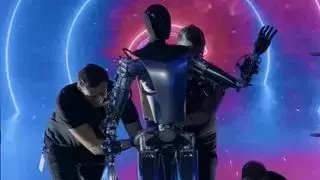
Unleashing the Potential: Tesla's Optimus Robot Pushes the Boundaries of Automation
Tesla's Optimus robot is rapidly evolving, captivating robotics enthusiasts and raising eyebrows. From walking faster to taking on factory jobs, this humanoid marvel is poised to redefine the boundaries of automation. But as Elon Musk envisions Optimus as a potential babysitter, the line between convenience and caution becomes blurred.Revolutionizing the Future, One Step at a Time
Optimus: The Multifaceted Automaton
During Tesla's recent shareholders meeting, Elon Musk unveiled the ambitious plans for the Optimus robot. Musk believes this humanoid creation could significantly boost Tesla's bottom line, with a projected price tag of ,000 per unit and the potential to sell in the billions. While the specifics behind this pricing model remain unclear, Musk's vision is undoubtedly grand, drawing parallels to the global car market's annual sales of around 100 million vehicles.Musk's optimism, though at times bordering on exuberance, is not without merit. As he acknowledged, "Now, admittedly I'm a little optimistic sometimes. You know, I don't have a complete lack of self-awareness. But if I wasn't optimistic, this wouldn't exist this factory wouldn't exist." This unwavering belief in the Optimus project has driven its rapid development, with the robot already being tested in Tesla's factories.
Optimus in Action: From Offices to Assembly Lines
Just a week after the shareholders meeting, Tesla released an update video showcasing the Optimus robot's progress. The footage revealed the humanoid's improved walking abilities, with less halting movements compared to previous models. Notably, the video also depicted Optimus taking on its first factory job, where it was seen packaging and carefully handling small containers.While the robot's motions remain slow and deliberate, the demonstration highlights its growing capabilities in the industrial setting. This transition from Tesla's offices to the factory floor underscores the company's ambitions to integrate Optimus into various aspects of its operations, potentially streamlining processes and enhancing efficiency.
Pushing the Boundaries: Optimus as a Caretaker?
Perhaps the most controversial aspect of Musk's presentation was his suggestion that the Optimus robot could potentially "babysit your kids" and "teach them." This notion has raised concerns among robotics experts and parents alike, as the idea of a cold, metal, and plastic automaton caring for children seems incongruous with the nurturing and empathetic qualities required for such a task.Musk's "sort of" qualifier does little to assuage these concerns, as the visual of Optimus interacting with young children evokes a sense of unease. While the robot's capabilities may continue to evolve, the prospect of entrusting the care of one's offspring to a machine, no matter how advanced, remains a contentious topic that requires careful consideration and public discourse.
Striking a Balance: Embracing Automation, Preserving Humanity
Musk's ambitious vision for Optimus highlights the potential of humanoid robots to tackle a wide range of tasks, from mundane chores to potentially dangerous jobs. However, the notion of these machines encroaching on the most human of responsibilities, such as childcare, raises valid concerns.As the technology behind Optimus continues to progress, it is crucial to strike a balance between embracing the benefits of automation and preserving the inherently human aspects of caregiving and nurturing. Robotics companies must tread carefully, ensuring that their creations complement and enhance human capabilities, rather than replace them in areas where empathy, emotional intelligence, and personal connection are paramount.The path forward for Optimus and similar humanoid robots will require a thoughtful and inclusive dialogue, one that considers the perspectives of experts, end-users, and the broader public. Only through this collaborative approach can the true potential of these technological marvels be realized, while safeguarding the fundamental human experiences that define our society.